

What are Seasoned Logs? (And Do They Burn for Longer?)
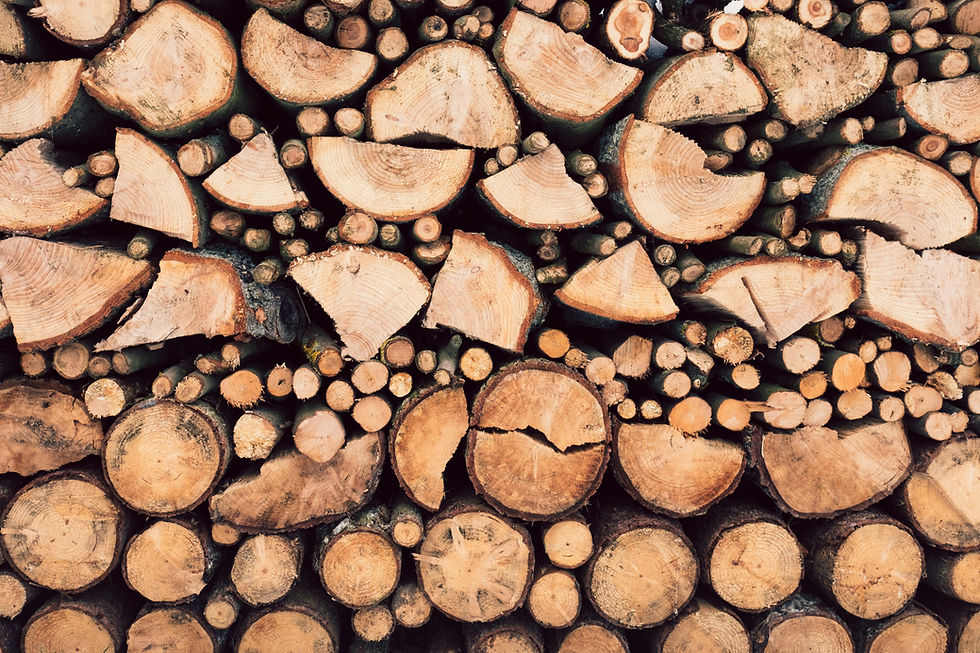
Seasoned logs are pieces of firewood left to air dry over a long period. This is normally one to two years, but varies depending on the type of wood. With most of the moisture evaporated, seasoned logs provide a more efficient burn, are easy to light, and, in general, are much better for your stove or open fire.
Do they burn for longer, though? Yes, compared with damp, unseasoned wood, you’ll get a longer burn from seasoned logs.
How long does it take to season firewood?
It depends on the type of wood. Softwoods such as pine, spruce or larch can take from 6-12 months to season. Hardwoods can take much longer. As a rule, split logs, stored off the ground with good airflow, will need around one to two years.
Our table below shows an approximate seasoning time for some of the most common woods used in fires, BBQs, chimineas and more.
Wood Type | Approximate seasoning time |
Softwood (pine, spruce, larch) | 6-12 months |
Birch | 6-12 months |
Ash | 12-18 months |
Sycamore | 12-24 months |
Beech | 12-18 months |
Oak | 18-24 months (sometimes longer) |
If the wood hasn’t been split or stored correctly, seasoning time can be considerably longer. We created a blog on the best types of firewood to use in England, outlining seasoning times, burn quality and more.
How do you season firewood?
Seasoning firewood does not have to be complex. In fact, it’s quite easy; you just need patience and the right conditions.
1. Split the logs: Splitting the logs exposes the inner wood and increases the area for moisture to escape. When logs are not split, the moisture is contained tightly and takes much longer to evaporate. At Black Dog, our standard cut is 9 inches, but we can cut to length on request.
2. Keep them off the ground: Stacking split logs on a pallet or raised base allows air to move through the pile as long as they are stacked loosely enough.
3. Cover the top and leave the sides exposed: Shield the top from rain but keep the sides exposed so the wood can breathe. Keeping the stack fully covered traps moisture.
4. Keep the wood in a sunny, breezy spot: Leave it to dry for one to two years with the sunlight and wind aiding the drying process.
5. Check the moisture levels: With a moisture meter, check the logs until you get a reading of 20% or less.
We cover storing firewood in much more detail in our blog.
How can you tell if logs are seasoned?
You can, and a few simple checks could tell you if your logs are well seasoned:
· Moisture meter: Split a log and push the meter into the freshly exposed part of the wood. If the reading is 20% or less, the wood is ready.
· Cracks in the end grain: A seasoned log will develop splits from the centre
· Loose bark: As wood seasons, the bark becomes looser and will start to fall away as the wood becomes drier.
· Weight: With less moisture held in the log, you’ll notice they feel considerably lighter than freshly cut logs.
· Sound: If you knock two wet logs together, you’ll get a dull thudding sound. Do the same with two seasoned logs, and you’ll get a more hollow sound.
· Easy lighting & steady burn: When you light seasoned wood, it catches quickly and burns steadily. Wet wood hisses and struggles to light.
Why do seasoned logs burn longer and hotter?
Put simply, seasoned wood is dried enough that more of its energy is released as heat. A fire made from seasoned logs burns hotter, cleaner and more steadily, giving you more warmth from each log.
In damp wood, much of that energy is used to boil the trapped moisture off first. This means much of that energy disappears as steam and not as useful heat. The wetter the wood, the more heat you lose, and the cooler, smokier and less efficient the fire.
As for burning longer, that comes down to density rather than drying. A denser hardwood like oak holds more energy and burns slower than a light softwood, so it lasts longer in the grate, regardless of how it was dried. It’s worth clarifying a common mix-up here, too. At the same moisture content, seasoned and kiln-dried logs give off much the same heat. The energy is in the wood itself, not the drying method. Drying in a kiln gets the wood there faster and more consistently, but seasoning allows you to unlock the heat naturally and cleanly.
Seasoned vs kiln-dried firewood
Both seasoned and kiln-dried logs can reach the 20% moisture mark that makes for a good fire; the main difference is how they get to that magic 20%.
| Seasoned | Kiln-Dried |
Drying method | Air-dried naturally over time | Dried in a kiln |
Drying time | 1-2 years (longer for oak) | Days to weeks |
Moisture content | 20% or less when done properly | Consistently low (10%-20%) |
Consistency | Very good | Highly consistent |
Cost | Usually more affordable | Usually more expensive |
Best for | Value and everyday burning | Convenience |
Should you choose seasoned logs or kiln-dried?
Kiln-dried logs are dried fast and to a consistent moisture level. This makes them a convenient and reliable option. You simply buy them and burn them! This does mean they come with a higher price tag, and due to the drying process, more energy is used getting the logs to the correct moisture level.
Seasoned wood, on the other hand, is dried under specific conditions to 20% or less and checked before sale. It burns just as well as kiln-dried wood and is considerably cheaper to buy. Furthermore, it doesn’t leave the same kind of energy footprint as the kiln-dried alternative.
Why unseasoned wood should be avoided
Wet, unseasoned wood with moisture levels above 20% causes problems at every stage. It’s hard to light, doesn’t burn as hot, is smoky and wastes valuable energy boiling off the water.
It can also increase the risk of house fires. The amount of tar and creosote that can be left in the chimney when burning unseasoned wood is much higher than when burning seasoned logs. Furthermore, the levels of fine particulate matter and smoke created by wet wood pose health risks that shouldn’t be ignored.
This is why the rules changed. In England, since May 2021, firewood sold in volumes under 2 cubic metres must be certified Ready to Burn with a moisture content of 20% or less. Larger volumes must be sold with instructions to season the wood before burning. Dry, Ready to Burn wood is the clean, efficient alternative that the rules are designed to encourage.
Seasoned hardwood ready for your fire, chiminea or fire pit
At Black Dog Forestry, we supply locally sourced hardwood logs (oak, ash & beech) that are seasoned and moisture checked to give you the best results. Based in West Sussex, we cut your logs to size and offer free delivery. Place your order today or give us a call to ask any questions you may have.
Seasoned firewood FAQs
Can you over-season firewood?
Not in terms of dryness. You can’t dry it too much, but if it is left in damp conditions, it will eventually start to decay, losing density and heat value.
Is seasoned wood as good as kiln-dried?
If the wood is seasoned to 20% or less and the moisture is checked, then yes. If not, then kiln-dried wood may perform better.
Can you burn unseasoned wood?
You shouldn’t. Wet wood is inefficient and smoky, and can damage your chimney as well as your health. In England, it is restricted for sale in small quantities.


Comments